Back In The Saddle

Hi! Big Waves!

Long time no talk….totally my fault! I’ve spoken before about the ebbs and flows of blogging and fell victim to it again. Life has been busy and it’s so easy to use that as an excuse. Bottom line, I haven’t made it a priority. And I can tell. I love blogging. Pouring my thoughts onto the page and engaging with so many people.

Time to get back in the saddle. So let’s talk about the things that are currently top of mind:

My favorite use of ChatGPT, why hobbies are necessary and book clubs!

Ok – first up – My Favorite Use of ChatGPT. I’m (admittedly) a bit old school. I love new techie gadgets, but have not embraced AI, Agents, ChatGPT like I probably should. It’s actually a minor goal of mine to open my mind and take a deeper look.

But I have used ChatGPT a little. You will never see me use it for my blog posts or even LinkedIn posts – I have a specific voice that I write in and I don’t want to lose that or water it down with something of mine re-written by ChatGPT. However my one very favorite use of ChatGPT is to write Out of Office reply messages for my email. Tell it where you are going or what you will be doing and some info about when you will be back and who to contact in the meantime and it will write up a witty reply for you. I like mine to be funny and memorable. Most people don’t read them anyway, but when they do happen to read mine they usually get a laugh! Here was my most recent OOO reply:

Out of Office Email

    Try it yourself next time you are heading out of office. Nothing wrong with inserting something that will make people smile! (of course it goes without saying, keep it clean and think about your audience)

    Hot Take: GET A HOBBY!

    A real one, or multiple. And don’t just ‘say’ it’s your hobby – actually ‘do’ the hobby! Hobbies are great ways to let off steam, continue to learn new things and get better at something. It’s a way to take a brain break from the everyday stressors like work and bills and ‘stuff’!

    I’ve got a couple of hobbies that I practice regularly – I enjoy running and yoga and try to fit those in throughout the week, I’m a reader and love physical books and audiobooks and go through at least 8-10 books a month in some format or another. I grew up around art and have found a fabulous creative art center that teaches a variety of classes near me. I recently took pottery wheel classes (which I loved) and am now in a print-making class. All the classes look interesting so I’m sure I’ll make the rounds.

    I’m sometimes a bit shocked that people don’t actually have real hobbies. Their days consist of work, maybe a workout or errand, tv, maybe computer games or web surfing. Sometimes they’ll say ‘cooking’ is a hobby but when you press it’s just the same meals, nothing new – so not really a hobby, just a normal thing people do. They aren’t making a concerted effort to learn, grow, engage with the world around them. Yawn. Boring.

    As I was writing this post I got an email from Logan Ury, author of How Not to Die Alone, about how to spot people who have a Growth Mindset vs. a Fixed Mindset…and this hit home with my thoughts around hobbies! Surround yourself with others who have a Growth Mindset! It’s contageous.

    What are your hobbies? Anything next on your list to try or learn?

    Into reading? How about you try (or start) a Book Club?

    My colleague and friend, Josue, and I had seen some posts from Vanessa Van Edwards on TikTok about non-verbal Cues and how powerful they can be. We started trying some of them on virtual meetings and were fascinated by them. We decided to read her book CUES and kicked off a book club at work to discuss a chapter every two weeks. It was an easy read, no pressure timeline and gave us an excuse to all get together and practice what we were learning in a safe space. It was such a blast. We had people across departments in the book club and got to know each other in ways we never would have and learned together. Next week we are presenting the highlights of what we learned in a Consulting Skills session to our delivery team.

    It doesn’t have to be a business/leadership book or with work peeps, it could be the latest book in the Empyrean series or a True Crime novel. Find a few people and pick something you want to read and setup a weekly or biweekly meetup at a coffee shop to discuss. No pressure, no skill needed. Just friends and a book and a good time talking (and maybe arguing) about the plot or points!

    Is there a book you’d recommend for a book club? Maybe even a book/movie club where you read the book then watch the movie and discuss the differences (The Devil Wears Prada anyone?) So many fun options!

    Ok – those are the things that were top of mind for me lately. The older I get the more I want to LIVE! To keep learning, keep engaging, to make the days fun! Even when things get stressful – no, especially when things get stressful!

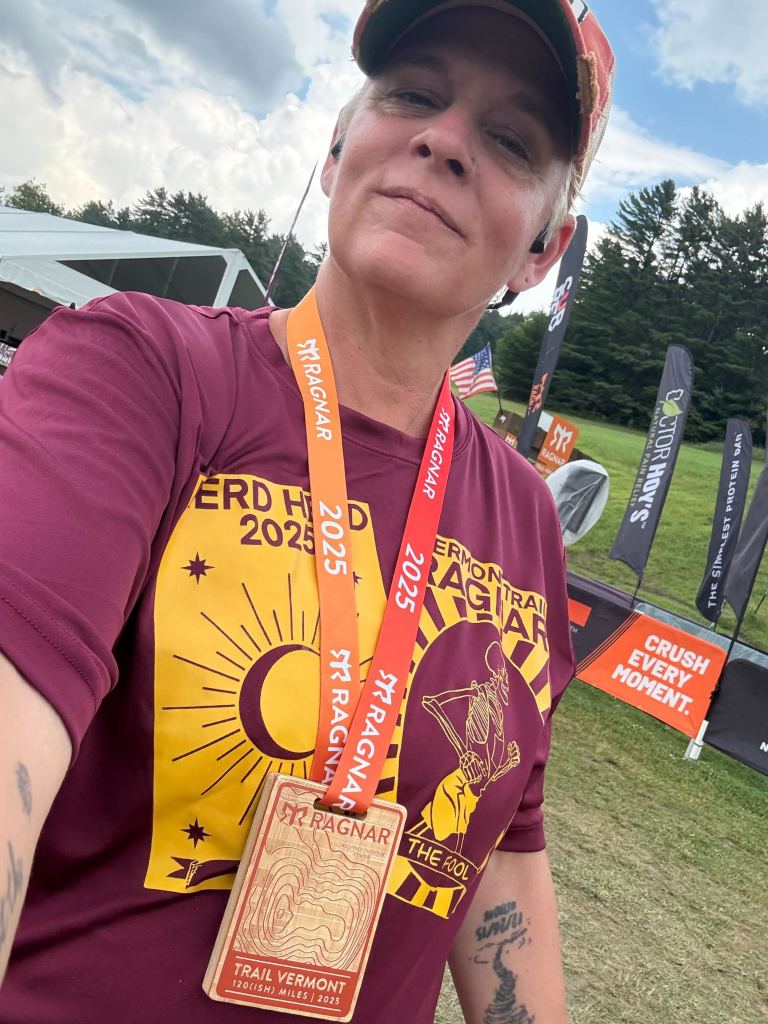
    I’ll leave you with a few pics of my hobbies – and a vow to keep blogging! Writing more is on my list for the remainder of the year now that I’m back in the saddle!

    Now – tell me what’s top of mind for you?

    Posted in Everything Else | Tagged , , , , , , , | Leave a comment

    Dreamforce Over the Years – A Celebration of Community!

    My first Dreamforce was 2012.

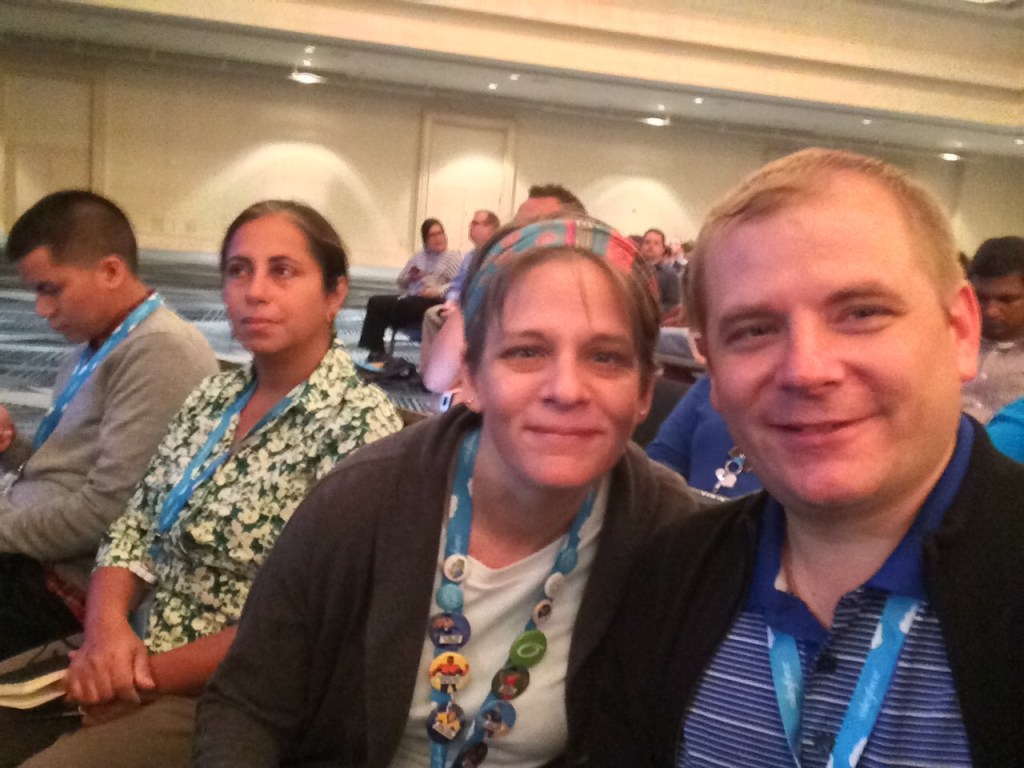
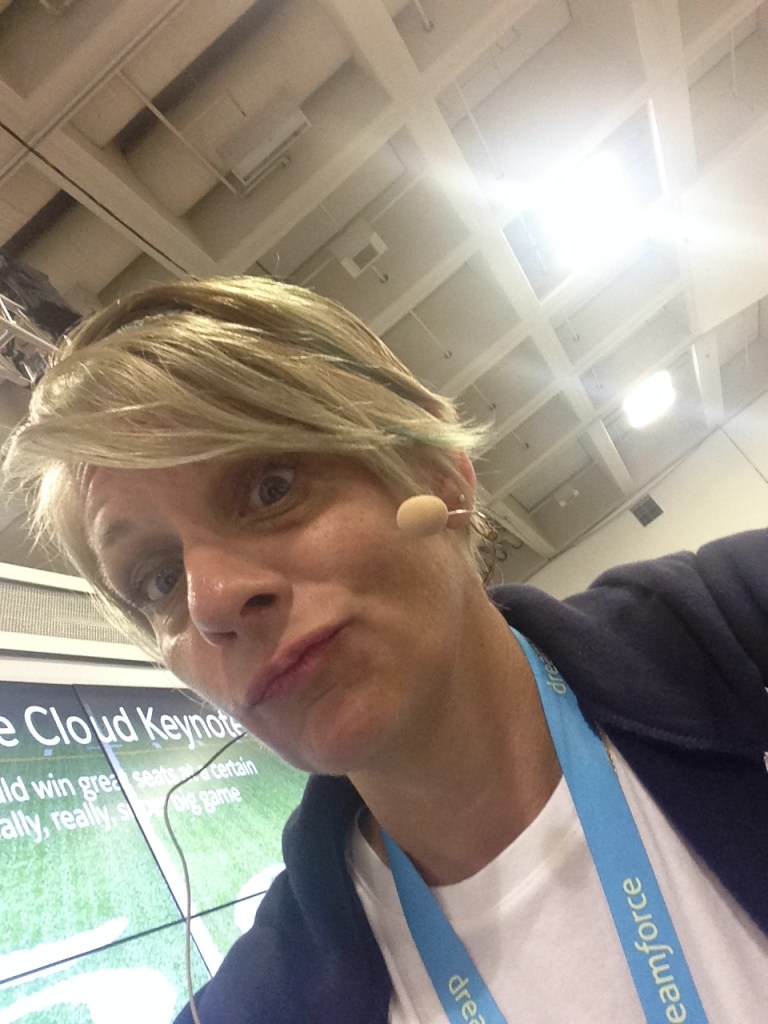
    Stoked to be at DF14

    I had been an accidental admin since 2007. Early adopter of the Salesforce Community, engaging with amazing Salesforce peeps on Twitter who helped me solve problems and make me feel not so alone as I embraced this new role.

    I took a new job in 2012 and was stoke to find out that in addition to a new great role, my first day on the job would entail picking up my laptop at the office and flying out to Dreamforce! Talk about an amazing first day!

    That first Dreamforce is a bit of a blur. 70K+ people in a city I’ve never been to. I was a late registrant so couldn’t book many sessions and had to wait in many overflow lines to get in. But being there energized me more than ever to embrace this Salesforce Community.

    Meeting John Graf (Nerdforce co-host extraordinaire at 2014 Admin Keynote)
    Meet the MVPs event in 2014 was a Highlight for sure!
    Met my SHERO Cheryl in person!

    Dreamforce 2013 and 2014 were just as awesome – I got to actually meet in person these amazing people in the community who had been helping me from afar at the Meet the MVPs session and make so many connections. I started blogging and kicked off a salesforce-themed podcast with John Graf who I met at the first ever Admin Keynote and threw myself into all the things.

    In 2015, Dreamforce was a whole different animal for me. Not only was there a huge focus on Admins at this Dreamforce but I was a newly-named Salesforce MVP, I was able to present in several sessions, got interviewed by the Salesforce Admins team about the Nerdforce podcast I co-hosted and got to party on the Dreamboat!

    The next few years at Dreamforce were as amazing – speaking lots and lots of times, hosting Dungeons & Dreamforce live for charity, helping to launch Trailhead with the Trailhead Gladiators gameshow at DF16 to the un-toppable experience of being featured in the Behind the Customer Series at the 2018 Admin Keynote and meeting Beck backstage in 2019!

    We all know what happened in 2020 and the virtual DF was just not the same! I was fortunate enough to be one of the few who got to attend the Hybrid 2021 Dreamforce in person and it was eerie being on the blocked off Howard street with a deserted city around us.

    We won’t talk about 2022 (I wasnt able to attend and still feel FoMo from it) but got back into the swing of DF in 2023 but as an attendee-only – no speaking gig!

    This year 2024 I am super stoked about attending! Specifically hanging with some of my Legends of Low Code peeps at the Platform Keynote on Wednesday as well as speaking on an amazing roundtable about “What I Wish I Knew When Building an Automation Strategy” on Thursday.

    As someone who never graduated college. Who worked for years in a factory before taking a low-paying office job. Who, one day, got asked to learn Salesforce out of the blue. To have come this far, with these amazing Dreamforce Memories. I can attest that this whole journey is one about PEOPLE. About COMMUNITY.

    That’s what Dreamforce is and will always be to me. A celebration of Community. Of people who stand up and stand in for each other. Of people who help each other and lift each other up. Of people who, no matter whether you speak the same language or live in the same hemisphere you have something in common.

    Whatever your Dreamforce looks like this year – whether you get to go in person or will be watching Salesforce+ from afar. Make it a point to connect with someone new. Re-connect with someone you haven’t seen in a while. Share your knowledge and experiences with others. Lift someone up. Let someone lift you up. Celebrate Community. I am fortunate to be a part of it.

    If you’ll be in San Francisco for Dreamforce and want to connect – let me know! I could use a concert buddy!

    Posted in Salesforce Stuff | Tagged , , | Leave a comment

    Asking For Help (Why Is It So Hard?)

    Is it just me or does everyone find asking for help a hard things to do?

    Whether it is help with something big or small, something personal or something work-related, something easy or hard, I sense that it’s not just me who struggles.

    As kids, we are encouraged to do things ourselves and rewarded for it. I think that sets the stage for our independence in both good and bad ways.

    For this post I’m going to focus on the importance of learning when (and how) to ask for help in your work environment specifically. If you are like me, you are a doer and a pleaser and you tend to say ‘Sure’ whenever someone asks you for help. Sometimes that can backfire – when you have too much on your plate already, when your deadlines are overlapping, when you aren’t sure where to start.

    When this happens, we do our best to get things done, but often the squeaky wheel gets the oil so we prioritize things based on who is asking for it the loudest and not necessarily based on what really needs to be focused on first. We juggle what we can but let’s just be honest and say if I were in the circus it wouldn’t be as a juggler!

    We don’t want to stop helping people. Or start saying ‘No’ all the time. But we have to know when to help ourselves by raising a hand.

    I had a boss 20 years ago (wow it kinda hurt saying that) who was my first boss/mentor in a business setting. He taught me all about Excel, showed me how to read/write formulas, saw that I was eager to learn and gave me the support and opportunity to grow (including tapping my shoulder when the company decided to implement Salesforce which changed the trajectory of my career forever)!

    I’ll never forget one of the sayings he used to have when giving me something to work on – he used to say:

    You have to know when to holler calf-rope!

    I didn’t actually know what that meant and had to ask. According to the Dictionary for American Regional English, calling calf-rope means to give in, surrender, to capitulate and was a phrase used in children’s games.

    Basically, that it’s ok to work on something on my own for a while but I can’t be too proud to say I need help. And to do it before things become too painful. I didn’t take it as admitting defeat, but instead acknowledging that I could use a hand or a nudge in the right direction.

    And now, 20 years down the line, I encounter co-workers and team members who are trying as hard as they can to stay afloat. Some folks who need some lessons in hollering calf-rope! So here are a few things I’ve learned:

    • Get used to asking ‘When do you need this?‘ when someone asks if you can do something for them. It will help you to determine whether you do, indeed, have the bandwidth to take it on. If you don’t ask but just say sure, then you already have mis-aligned objectives. The person asking likely doesn’t know what else you are working on or when those things are due so it is up to you to ask the right questions.
    • If it’s not clear up front (in the request) always find out ‘How do you need this?‘ Do they just need an informal summary of your findings in a teams message? Do they need a document with screenshots? If you are configuring something, what do they need you to show them when completed? This will save you a lot of heartache when you think they just want you to tell them what you found out and they are expecting a slide deck with formal recommendations.
    • Be wary of vague requests and try to gather as much information as possible. Do you have all the information you need to be successful? If not, who can provide that information? I hate it when someone just asks, ‘Would you have time this week to help so-and-so with <insert process here>’ – help how? Answer questions? Do it for them? Set it up? Tear it down? Translate it into pig latin? Without the proper context you could be signing up for something that you really don’t have the time for.

    Even when we do the above, we can still easily become overloaded. In the consulting space, we are often on multiple projects at various stages, we work with different teams that have different priorities and deadlines. So you are truly the only one who knows everything on your own plate. When one project manager asks you to work on something, she doesn’t necessarily know you planned to work on your other project today unless you speak up.

    Task Management tools can be a big helper in this area – so others know what tasks you are working on and when, but even the best ones have limitations. Some are limited to client/project tasks only and don’t include non-project related items, sometime projects are managed in different ways or systems, and any tool is only as good as the data that is being entered into it and the people looking at it to make decisions. This isn’t a post about task management tools themselves (although hit me up to talk about the project management capabilities of Certinia for services organizations), but instead think of ways we can keep track of our own to-do list and deadlines in a way that we can raise our hand for help when it gets a bit…ahem…unruly!

    I get overwhelmed when I have too much to do and it feels chaotic. So I’ve developed my own system where each week on Friday I do the following:

    • I look at our Resource Planner to see what hours my PM’s have allocated to me for the upcoming week and I pop open a spreadsheet and I start a little table showing each project and the Scheduled hours.
    • Then I look at the upcoming week on my calendar. What meetings do I have? Is everything up to date on there? In the spreadsheet I list out the number of hours I have booked for meetings (grouped by Project) – so it’ll show Project A – 4 hrs, Project B – 2 hrs, Internal Meetings – 2 hrs and so on.
    • For each of the meetings, do I need to prep for anything? If so – I block out time on my calendar so I can prepare. (could be research needed or a slide deck or just 30 minutes of mental prep before the call!) In the same spreadsheet I’ll add a column by each Project and indicate meeting Prep time required.
    • Next column in the spreadsheet is the number of hours (outside of meetings) that I need for actual action items/to-dos for each Project.
      • Typically this involves creating a list under the table with the action items listed, which project, due dates (if any), priority and estimated hours.
    • Now that I have the hours needed between Meetings and Prep and Action Items, I look at my work calendar (how many hours I have in each day available to work) and look to see how many of the action items I can take on.

    Now this is where I’ve learned to holler calf-rope! When I’m looking at my list and between the meetings and prep and action items, if the hours are well over my work calendar hours, I know I need to take a hard look at things. Are there deadlines I can push? Is there work I can delegate?

    Sometimes I simply raise my hand and ask my peeps to help prioritize – I can quickly send a group message to my multiple project managers and manager and say: ‘here are all the things I have on my list and deadlines – can y’all help me determine what to work on!’

    As I said before – often these folks don’t know the extent of the things I’m working on because they are only responsible for their Project. When I’m working on multiple projects I need them to communicate together and sometimes compromise together to ensure we can get the work done so everyone is happy and I’m not burnt out!

    And for those who may be worried that it will make you look weak or like you can’t handle things or whatever – that is simply head trash. I can guarantee that any PM or Manager worth their salt would rather you be open and honest with them about how much time it will take you to do things and what other competing items are on your plate than for you to stay silent and get buried under unachievable deadlines and throw multiple projects in turmoil.

    Learn how and when to holler. CALF-ROPE!

    Typically I use the spreadsheet I created and just adjust it week over week. Also – I block my calendar for the times when I need to be heads down working on something. It helps me plan the work down to the day I’m going to do it, but also to protect the time from others who may think an open slot on my calendar means I have time to do extra stuff!

    Staying organized, being deliberate when saying ‘Sure’ to additional work, and knowing when to ask for help are just a few of the ways I stay sane in a busy busy work environment. (psst – this also applies to things at home as well!)

    Any tips you’ve learned over the years to help manage?

    Posted in Everything Else, Salesforce Stuff | Tagged , , , , | Leave a comment

    We Got Skills! They’re Multiplying!

    But are we Losing Control??

    If we (as Services Organizations) don’t have a good way (tool) to keep track of our Resources’ skills AND have a way to cross reference that with the upcoming and existing work, then we definitely are!

    ‘Cause the power a tool like this could be supplying – it’s electrifying!

    Whether you are a small, medium or enterprise-sized services business there is something you have in common – people. Ultimately, people are the core of any services organization. There are so many ways our people are contributing – from leveraging their technical skills, their industry and business acumen, to work with customers, lead projects and become trusted advisors. Ultimately it is the people in our organizations and their skills that enable us to do anything from sales to customer success to services delivery to operations and more!

    Technical skills, power skills, industry skills, business process skills, and certifications – there are hundreds (even thousands) of things we want to know about our people.

    Let’s take an area near and dear to my heart – the Salesforce App Certinia (formerly FinancialForce) as an example – when thinking about the skills needed to implement there are a plethora:

    • Certinia has multiple Products & Solutions (PS Cloud, ERP Cloud, & CS Cloud)
      • Each of the Products has distinct Feature Areas which someone may or may not know how to implement:
        • For Example: PS Cloud has Resource Management, Project Management, Services Billing, Services Revenue Management, Services CPQ, Services Community and more)
    • Since it is built on the Salesforce Platform, there are Salesforce skills needed
    • Sometimes you need someone who knows the above Technical skills, but sometimes you need someone who knows these Products and Features from a Business Process perspective. Not just ‘how’ to implement or set it up, but ‘why’ you might want to do this vs. that.
    • Sometimes you need someone who has industry specific knowledge around both the technical and process discussions.
    • As important as the technical, process and industry skills (maybe more so) are the Power Skills – those related to communication, teamwork, problem-solving, story-telling, requirement gathering and leadership.
    • Finally we can’t forget the Certifications – there are Certinia specific certifications, Salesforce Certifications, Partner Certifications, and others like PMP or Six Sigma.

    But there is more to saying: Sandy is skilled in implementing PS Cloud. We need to know more. How skilled? For how long? In what specific areas? What are some projects or clients where this was demonstrated? What are areas where she is aspiring to gain a new skill? Or what if she’s been told she needs this new certification by a certain date to meet a requirement?

    This is starting to look like a gigantic spreadsheet. ‘My Resource’s Skills & Certifications’

    Now let’s pivot from the skills our people have, when we have a potential lead or opportunity and we identify that this is going to be a PS Cloud implementation, we know there are certain set skills needed to implement at a minimum. As we talk more to the client about their needs and desires we may realize we need people with higher level skills in some areas, or a specialty in another. And as we think about when that project might be starting, we have some tentative dates for when we need resources with those skills.

    Another gigantic spreadsheet in the making. ‘Pipeline by Skill & Certification’

    Finally we want to cross-reference the two spreadsheets and add in what my resources are currently working on so I can see that analysis of the Need, the Fit and the Availability over time for the ultimate in Capacity Planning.

    • Do we have the Resources with the Skills needed to fulfill the Need over the next month, quarter, or year?
    • Do we need to not have enough Resources in a particular area so we need to hire?
    • Do we need to outsource Work?
    • Do we need to ask Resources to skill up in certain areas?
    • Is there a specific Skill Set or area that is being underutilized or is no longer a focus?

    These are just some of the really amazing insights you can get when you have the data in a way that is sustainable (pssst – spreadsheets are NOT sustainable)!

    This is one of the areas I love the most about the Resource Management capabilities in Certinia PS Cloud. The ability to do all of the above and more!

    Comprehensive Skills Management functionality that allows you to maintain the skills and certifications important to your services organization, grouped by region or practice or role or type. Setting up sets of skills that can be applied together if they are linked. The ability for a resource to rank themselves on a skill and submit for approval. Track certification expirations and aspirational skills. The ability to manage skills in bulk for large groups of resources. To request a resource with certain skills and let the system tell you not only who fits the mark based on skill but availability as well. To see what skills a resource used on projects they’ve been assigned to. To setup a way to allow a resource to volunteer for an upcoming project based on skills they possess or are looking to learn. To implement a regular review process for resources and their managers so it’s a continuous process with accurate up-to-date information anytime it is needed.

    Then layer on top of this all of the amazing reporting and analytics you can get on the Salesforce Platform.

    For Services Organizations, where skills are what we are selling, this is a MUST – it shows your resources their skills matter and ultimately it can show your customers that you have the right teams at the right time with the right skills to do the job. Win/win/win!

    If you are slacking in this area You Better Shape Up!

    With the right tool in place you, your resource management teams and your customers will be able to say with confidence:

    You’re The One That I Want!

    Posted in Salesforce Stuff | Tagged , , , , , , | Leave a comment

    Utilization Reporting in Services Organizations

    Utilization

    A consultant’s not so favorite word. Tracking utilization means you have to track your hours. Which is tedious. And usually there is some aspect of your performance metrics and or bonus structure that is tied to Utilization and a Target of some sort.

    I’ve seen job offers that say you are eligible for X amount of bonus based on hitting the utilization target, that you must reach at least 70% of the target (and the bonus is calculated based on that) to get any at all, but the full bonus is only paid out if you hit 100%. And the target was 100% billable utilization based on 2080 hours. Oh and on top of Client work, you had to recruit and bring in sales as well. So basically there is no way you are ever getting a bonus. That means no days off (even holidays) and anything not specifically billable has to be over and above the 40 hours a week. No thanks.

    I’ve seen jobs where you are bonused off meeting your utilization target on a sliding scale once you’ve hit at least 75%. But, that is calculated as Billable hours divided by Work Calendar hours. Similar to above you are penalized for PTO, but holidays are removed from the equation. (Time off is usually part of your compensation package so it’s weird that some companies penalize you for it.)  Where this one really breaks down is when you aren’t in charge of your own assignments. Should you get penalized and miss your bonus because you were on the bench and you weren’t given any billable work? Or because you were redo-ing work that someone else screwed up and your hours couldn’t be billed? None of those are fair.

    I’ve seen jobs where they look at the whole picture – Productive hours (billable and things deemed productive) divided by the hours available to the resource. So you aren’t penalized when you take time off. This is great for the Resource, but companies that focus on dollars in dollars out don’t like this one because the numbers are usually higher and not 1:1 reflective of revenues.

    All of these calculations can tell different stories about the health of the business depending on what you are trying to evaluate.

    Let’s break down the various ways to calculate utilization:

    Billable Utilization: Billable hours divided by Work Calendar hours

    • This one shows exactly how billable someone was – the hours they worked that were billed to the customer compare to the standard work calendar
    • I billed 10 hours out of a 40 hours work week – my billable utilization was 25%

    Productive Utilization: All Hours that could be Revenue Generating (Billable hours plus Credited Hours) divided by Work Calendar hours

    • This one shows the time I spent on work that is considered ‘Productive’ – whether it is billable or not – Sales calls, credited non-billable client work, etc.
    • I billed 10 hours out of a 40 hour work week and logged another 10 on an RFP for sales which were credited to me – my Productive Utilization is 50% since half my week I worked on productive work

    Total Utilization:  Billable hours plus Credited Hours / Work Calendar hours minus Excluded

    • This one is about what I did in the time I was available to work (not based on Work Calendar – taking into account time off or excluded for some reason)
    • I billed 10 hours to the client, had 10 hours of Credited work, and took PTO for 2 days – my Total Utilization would be (10+10)/(40-16) = 83%

    So for the same resource in the same week I could have 3 very different numbers depending on how you calculate it:

    • 25% Billable Utilization
    • 50% Productive Utilization
    • 83% Total Utilization

    If you focus only on Billable Utilization – then you may never hit your targets because resources inevitably take time off and work on things that may be important or even client facing but not ever billable to a customer. You definitely need to know how much of your resource time is billable – you can compare that to the revenue generated to get insights into time to value, but it shouldn’t be the only indicator of resource utilization.

    Productive Utilization is a great indicator of work that is deemed valuable vs work that isn’t. Work on a client project that can’t be billed because hours weren’t estimated accurately or there was a credit for some reason shouldn’t count against a resource. Often it isn’t their fault – they are doing work for a customer, end of story. When you pull a resource off a Billable Client Project to help on a Sales call. They are potentially helping to generate future revenue. Productive Utilization can help project Targets for your resources, give you an idea of the overhead time that is typical so you can include that in your plan.

    If you focus on Total Utilization, you may have really great numbers but you end up not billing enough because resources are taking a ton of time off. This calculation is a great indicator to see whether resources are spending the time that is available to them on productive work. If you give people PTO, should you penalize them for using it? If you aren’t removing it from the denominator then you kind of are….but if you only look at this as an indicator of how the organization is doing, it is deceiving. On a month where a lot of people take PTO (December for example) – your Total Utilization might be projected at 85 or 90% but you end up billing a fraction of normal because so many people are taking time off.

    Each of these calculations tell different stories depending on the decisions you are trying to make! Total Utilization is great for Resource performance – in the time they have are they utilized? Billable Utilization is great for Revenue projections – how billable are we expecting our resources to be? And Productive Utilization is great for assessing staff productivity as a whole.

    Do you shudder when you think about utilization?

    Do you geek out like me when you think about all the ways to look at it?

    Have you never really thought much about it?

    Posted in Salesforce Stuff | Tagged , , , | Leave a comment